
Paris, je t'aime
Reflections on 15+ Years of Visiting the City of Light

I first landed in Paris on a direct flight from Chicago in 2011. Like many American Francophiles, I’d been dreaming of it since my introductory French class at the age of 11, studying French every year since as I worked toward my ultimate goal: live in Paris. I was there for a semester abroad and an experience I hoped would lead me to live in France permanently. Soon, I was immersed in big city, French, and Parisian life, trying to navigate the eccentricities of my beloved house mother, the infamous Paris métro and webby bus system, budgeting if I could afford a baguette sandwich for lunch on my meager savings, and yes, discovering wine for the first time. All of this was exciting—enthralling, really—and I of course fell head over heels in love with the city each passing second I was there. But the Paris of 2011 and the Paris of 2026? They’re almost completely unrecognizable. In the best way.
My core takeaway from that initial experience living in Paris was this: make yourself small. Do whatever you need to do to blend in. Perfect your accent. Wear neutral clothing only. Don’t talk loudly on the phone in public – and certainly never talk in English. At the time, anti-American sentiment was abating in the aftermath of the Bush years (read: thanks, Obama!), but in the France I first encountered, nobody was going to speak English to you under any circumstances and, if they did, you’d failed in your mission. I was taught that the Parisians of the era were relentless in their hatred of the English language. I was warned by both American and French professors that they simply had no tolerance for any other language than French, that they were mourning the death of the cultural and linguistic hegemony they felt they’d enjoyed hundreds of years earlier in the West, and that the best way to get along in France was to, well, pretend you were French for as long as humanly possible. I took this advice very seriously. On the one hand, I credit this attitude to the reason my French accent is often praised. (Grateful for that part, at least.) On the other, it created a very different French version of me that was smaller, less self-assured, and nearly silent. When my very American family came to visit for Christmas, I wrote a long email that detailed these cultural requirements and I begged them all to read it before boarding the plane. “No bright colors! No loud talking on the subway! Don’t make eye contact or smile at anyone!”, I implored. I couldn’t possibly have them destroy the careful reputation I’d built among total strangers that I was not that American.
But it wasn’t just a question of language, hospitality, or fashion. The coffee was terrible but the café culture was so vibrant it was hard to grab a table at any of the more central arrondissements nearly any time of day. The métros were expansive but felt ancient, with creaking doors that had literal metal levers to open them, graffiti on windows, and frequent delays for traffic regulation. The extraordinary human diversity that would come to define the Paris I got to know and love in the late 20-teens and 2020s wasn’t quite yet evident within the péripherique, which still felt mostly white and mostly “franco-français” (meaning not just white – but French going back generations, with very French surnames for avoidance of doubt) in many neighborhoods. The infamous Châtelet subway station was a labyrinth from hell with few directional signs, lots of pickpocketers, and all kinds of grifters in the shadows. If you looked like a target in a tourist area like Montmartre (read: a loud American in bright colors), you’d be followed by throngs of children asking you to sign a petition for God knows what or unlicensed souvenir guys who’d mistake your accidental eye contact for an interest in purchasing their cheap metal keyrings. The restaurant scene had a few bright spots for Lebanese and Laotian cuisines, and the bakeries were exceptional, but the traditional French bistrots I wandered into for dinner on occasion were almost always utterly devoid of flavor – and every dish desperately needed salt. Fine dining had a stronghold, but as a poor student I certainly couldn’t be seen in the halls of Michelin starred restaurants, so the impression I’d formed of French cuisine was that it was either the best croissant ever made or a very meh boeuf bourguignon. The traffic was terrible and biking was untenable. (I tried, had a panic attack, and vowed to never attempt it again.) The tension of a forthcoming seachange was palpable, but it hadn’t yet arrived. In a way, the Paris of then resembles what I feel in the New York of now: it had diversity but many neighborhoods (and even sections of subway lines) felt largely segregated along racial or ethnic lines, the divisions between bourgeois Parisians and their working-class counterparts felt obvious and uncomfortable, and the city desperately needed significant investments in infrastructure – not to mention a revitalization of an accessible, high-quality wine and food scene. Above all, a place where being a tourist was discouraged, even if a significant percentage of the city’s income depended on foreigners spending their big bucks inside.
Fifteen years later, on my most recent trip to France in April of 2026, it was more evident than ever before that the version of Paris I’d once memorized the social codes for had—thankfully! happily!—ceased to exist. I was blown away by the expansion of multiple subway lines, the reconstruction and modernization of the stations, and marveled at how so many of the hospitality workers smiled, switched to English in a happy tone, and chose accommodation over derision when speaking with tourists. As I walked through my favorite neighborhoods in the 10th, 19th, and 20th, I was reminded of how much the city’s diversity had shaped it: on a twenty minute walk, I heard French, English, Spanish, Japanese, Arabic, and Portuguese. The sheer variance in people—their ages, their skin tones, their languages, their religions—was new with every step. The food scene felt a veritable dream. Its immense, high-quality selection of restaurants in every arrondissement is home to cuisine that puts many other cities to shame. There are now vegan restaurants (unheard of in 2011), fusion restaurants of every color and shape, and the architectural design of interiors even on the fast-casual level makes every meal feel important. Influencers (myself included) all release recommendations weekly for “the best restaurants in Paris” by the dozen. The dress codes of the 2010s have vanished. The city’s youth have a penchant for fun, bright jackets, American sneakers, and even (le gasp!) leggings and sweatpants – in public (le double gasp!)! While I’ve traveled to, and indeed lived in Paris, many times since 2011, this visit was the first time I really thought, “Wow, she’s made a total 180 – in the best way.” Like seeing a good friend of yours break up with the ex who was keeping her from being her most beautiful and authentic self, the Paris of today feels free.
None of this is groundbreaking. It’s something one of my favorite writers, Lindsey Tramuta, explores at length in her books The New Paris and The New Parisienne, but even in the years after those books were published, the Olympics, the pandemic, and the mayoral tenure of Anne Hidalgo seem to have all congealed at the right time to take the city to new heights in a way I hadn’t noticed before. If you’re an American reading this, worried about flying to Paris for the first time or returning after a few years away, I’m happy to report there’s nothing to be concerned about. Even with the global geopolitical mess of a context we’re living in – saying “Bonjour”, “Merci”, and being polite to everyone you meet is all you need to do. Pack your curiosity, your hunger, and a desire to soak it all in. You won’t need a trench coat and a black turtleneck like I did in the 2010s to feel like you belong. All you need is an interest in discovering one of the world’s most electric cities. I hope you enjoy every minute.
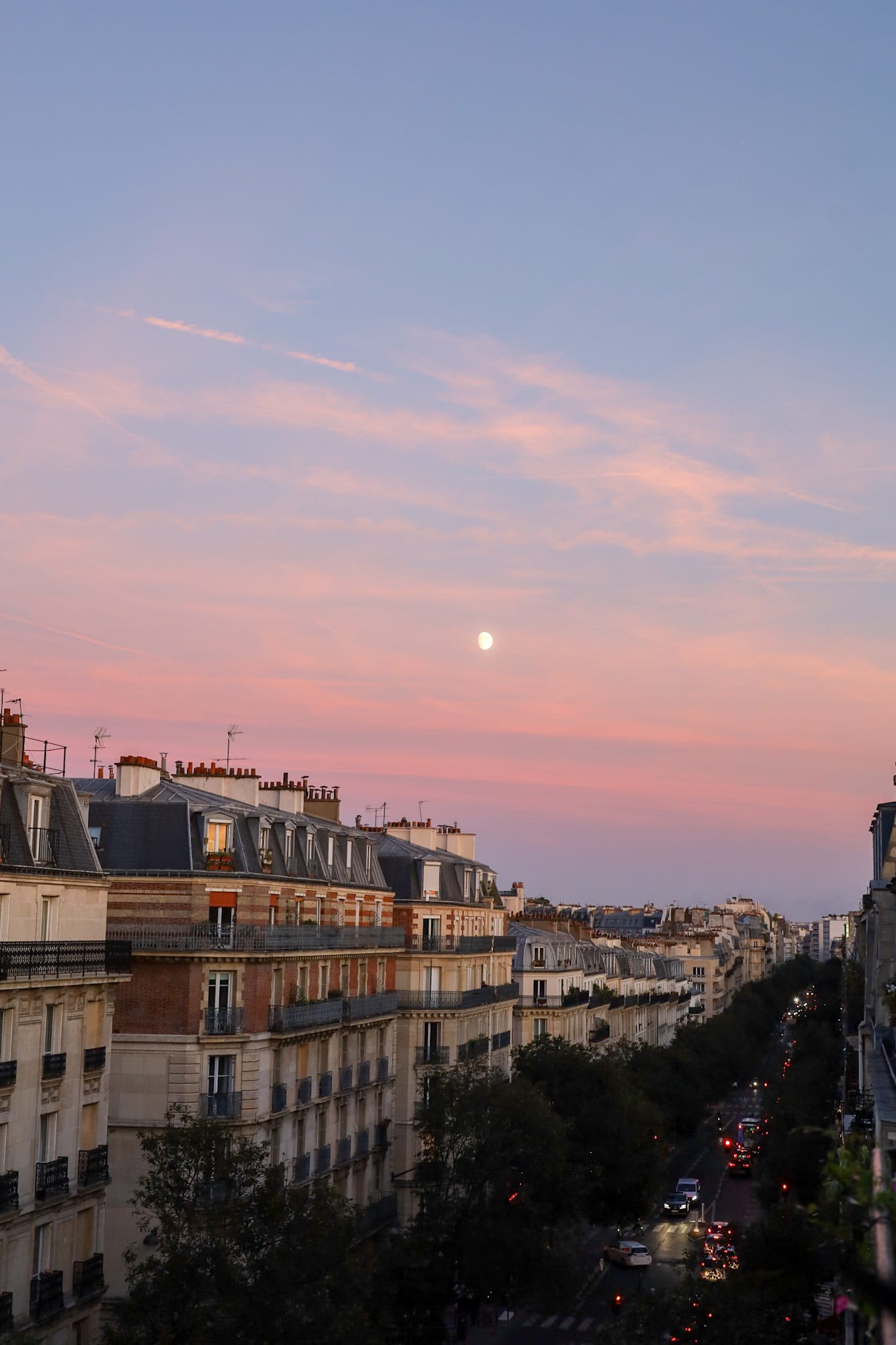
Nice to see Paris through your lenses.